

By Deacon Timothy Siburg
Revised Common Lectionary reflection for the First Sunday after Christmas, Year A
December 28, 2025
Key Verse: “I will recount the gracious deeds of the Lord, the praiseworthy acts of the Lord, because of all that the Lord has done for us and the great favor to the house of Israel that he has shown them according to his mercy, according to the abundance of his steadfast love.” -Isaiah 63:7
Merry Christmas! This Sunday brings us officially to the Fourth Day of the great Twelve Days of Christmas. As such, we find ourselves sitting with familiar stories that show the complexity of life and faith. Whereas the consumer-world might suggest Christmas is over, we know better. Whereas society-at-large might assume Christmas is supposed to be only happy and joyful, we know better. For God is made incarnate, and God abides. This week’s stories point to this duality and tension of the now and not-yet fulfillment of the Kingdom of God.
It’s not lost on me that this quite possibly is the most unpreached on Sunday in the church year. And I would not fault you for doing what many a congregation does during the First Sunday after Christmas, enjoying a more-relaxing worship experience filled with lessons and carols, in part perhaps to give your hard-working and faithful preacher a break. But this year, might I suggest the hope that some homily of sorts might be offered.
The stories before us call us to name some things. And from a stewardship perspective, being it as this will be the last Sunday of the calendar year, it may also be the last opportunity for people to respond joyfully and gratefully through any year-end sort of giving or financial response.
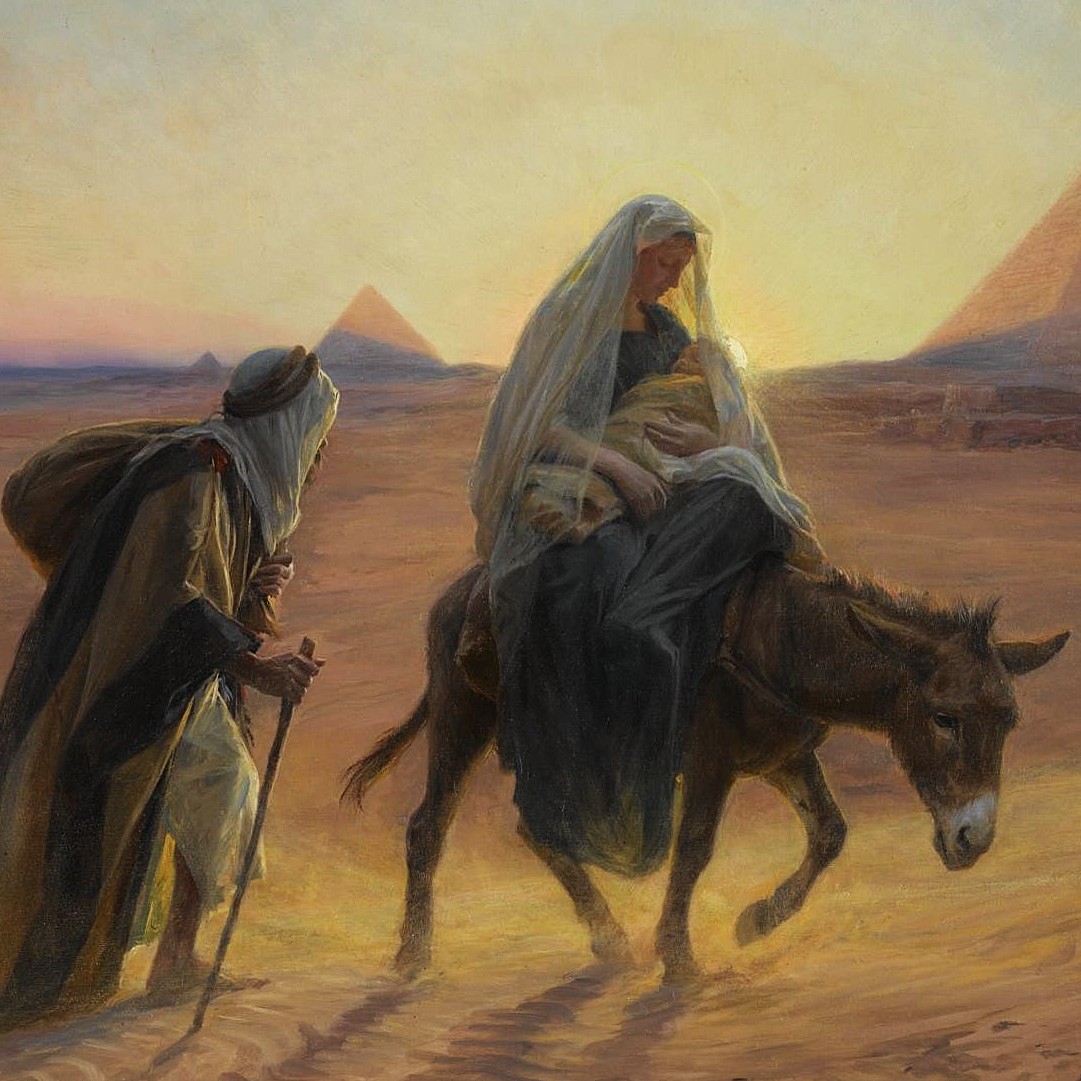
The gospel story this week needs no introduction. It’s the continuation of Matthew’s account of Jesus’ birth, picking up immediately after the Epiphany story as the magi have departed from their visit. As a dad, I have always appreciated this account, simply because Joseph gets his moment in the nativity story. He has a dream. The angel of the Lord tells him, “Get up, take the child and his mother, and flee to Egypt, and remain there until I tell you, for Herod is about to search for the child, to destroy him” (Matthew 2:13).
Yes, the holy family are refugees. They are migrants and immigrants. Yes, this should call us to wonder, notice, and take pause. For today, our neighbors all around us are afraid. It’s no wonder that many congregations in the United States this year have dedicated or adjusted their nativity scenes to include a response to current events – with chain link fences, cages, or signs related to ICE. The old question made popular in church circles a couple decades ago comes to mind, “What would Jesus do?” That’s a question we might all need to wrestle with a bit amid the realities of the world around us, and the fact that this is very much part of the Christmas story.
The story of Christmas isn’t just a story of angels and shepherds. It’s a story of heartbreak and fear, of power gone awry, and at the same time, the presence of God amid all of it.
We know what comes next in the story. While the holy family is away, the powers of evil, sin, greed and corruption run rampant because of a weak leader’s fear that he might lose power. Herod does what he does and slaughters the innocents. “Then what had been spoken through the prophet Jeremiah was fulfilled: ‘A voice was heard in Ramah, wailing and loud lamentation, Rachel weeping for her children; she refused to be consoled, because they are no more’” (Matthew 2:17-18). This story is biblical, but it might as well be a story from today. For power and violence continue. Fear continues. I’m a young dad now who worries about my kids in school, and it hits me. I was in elementary school when the Columbine school shooting happened. Now I have my own kids in elementary school. What has changed? What have we learned? But then we remember a story like this and are confronted by its truth. We are confronted by the complexity of the story of Jesus’ birth, incarnation, life, death, resurrection, and ascension.
We know the rest of the gospel story. There will be another dream or two. The holy family will return and eventually reside in Nazareth. But the fears, worries, and dangers of the world will not dissipate. And we know the remainder of the gospel story. But we also know that the why behind it is a gift and a promise. The gift and promise of God with us, Emmanuel. The gift and promise of the incarnation. The gift and promise of Christmas.
The prophet Isaiah helps us remember. “I will recount the gracious deeds of the Lord, the praiseworthy acts of the Lord, because of all that the Lord has done for us and the great favor to the house of Israel that he has shown them according to his mercy, according to the abundance of his steadfast love” (Isaiah 63:7). The prophet reminds us of God’s saving presence grounded in love (Isaiah 63:9). All that God does is for you and for me. Meeting us where we are. Walking with us through the good and bad, the ups and downs of life. The moments of great joy and uncontainable wailing and grief too.
The writer of Hebrews points to God’s work and reminds us that Christ became one of us, a human (Hebrews 2:17). The incarnation means that we are, in fact, siblings with God in Christ. God is one of us and knows our deepest joys. Our deepest dreams. Our deepest sorrows, and griefs. The weight of this will ultimately lead to and through the cross. This might seem heavy for the Twelve Days of Christmas, but it’s precisely why I believe this story from the Gospel of Matthew is part of the Christmas story. So it doesn’t get watered down. So we don’t all think it’s some perfect kind of fairy tale where everything is happy and well with the world.
God in Christ meets us where we are. If we are overcome with reminders and pains of the world, of death and sorrow, we can also cling to the hope and promise that these things do not have the final word. And when we remember this, we can join in with the psalmist with a full heart of hope and trust in God’s promises by singing, “Praise the Lord! Praise the Lord from the heavens; praise him in the heights!” (Psalm 148:1). May we do so together in hope and faith. Merry Christmas! In Worship and Congregational Life
A question we might ask ourselves, given the fullness of Christmas, is how might we respond? How might God be inviting us to respond as part of God’s work and mission today? In most ministry contexts, this Sunday will be the last worship experience of 2025, and as such, it’s likely the last major opportunity to receive year-end gifts or to have one’s household financial contributions count toward their giving for the year. Might there be a way to celebrate the Twelve Days of Christmas while briefly telling a story about the mission and ministry the congregation has been involved in over the past 12 months, and what it is looking forward to being a part of in the upcoming 12 months? Telling such a story of God’s work being done and of lives being changed could be powerful, and a direct link to an understanding of the Incarnation as God’s love is present and made real daily with, for, through, and in God’s beloved.
Worship with Youth and Children
Popular culture likes to suggest that celebration of Christmas is over once Christmas Day ends. But we know and believe differently. What might it look like to lean in and fully celebrate the Twelve Days of Christmas, as Christians did generations ago? The 12 days between Christmas Day and the arrival of the Magi at Epiphany, Jan. 6? That’s a question that could be explored Children’s Sermon to glean the wisdom of the faithful who are gathered for worship this week. Maybe it’s something that together as God’s people we might commit to living out, to live with joy, hope, peace, and love every day, but especially throughout the eight days left of the Twelve Days of Christmas. What are ways that you live out the 12 Days of Christmas fully?
Previous reflections for Christmas 1A:
2016 – Unlikely dance partners: Lament and hope
2013 – Refugees all
2010 – Merry Christmas! What now?




Leave a Reply