

By the Rev. Micah Krey
Revised Common Lectionary reflection for the Second Sunday after the Epiphany, Year A
January 18, 2026
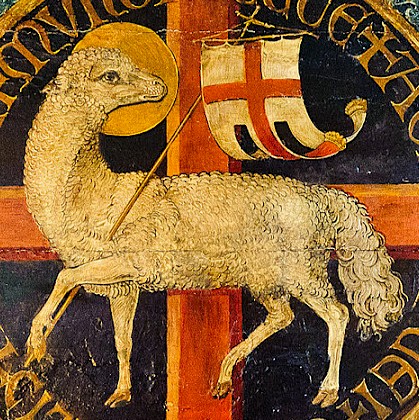
Key verse: Here is the Lamb of God who takes away the sin of the world! -John 1:29)
Epiphany is the season of revealing, of God making known who Jesus is and what that means for the world. In the readings for Epiphany 2A, that revelation takes a particular shape: it is not flashy or triumphant, but relational and invitational. Again and again, God’s work is revealed through witness. Stewardship, in this frame, is not primarily about what we possess or control, but about to what (and to whom) we point with our lives.
The Gospel reading centers on John the Baptist’s testimony. John does not claim Jesus for himself, nor does he attempt to manage the outcome of his proclamation. Instead, he simply bears witness: “Here is the Lamb of God.” John understands his role clearly. He is not the light, but he points to the light. His stewardship is one of attention and trust, paying close enough attention to recognize what God is doing, and trusting enough to let others follow where God is leading, even when that means stepping aside.
That same dynamic appears in Isaiah’s call narrative. The servant is named and claimed by God before being fully understood or recognized by the world. The scope of the calling expands beyond expectations: not only to restore Israel, but to be “a light to the nations” (v. 49:6). This is stewardship of vocation. God entrusts a calling that is larger than personal success or immediate results. Faithfulness, not visibility, becomes the measure. Stewardship here means offering one’s life (words, actions, presence) as a vessel through which God’s light reaches farther than we can imagine.
Psalm 40 echoes this posture of lived witness. The psalmist does not focus on private belief but on embodied faithfulness: “I have told the glad news… I have not hidden your saving help” (v. 40:9, 10). Gratitude overflows into testimony. What God has done becomes something that must be shared, not hoarded. Stewardship, then, is the movement from receiving to telling, from being rescued to becoming a bearer of hope.
Paul’s opening words to the Corinthians ground this witness in grace. Before addressing the community’s struggles, Paul reminds them that they cannot lack spiritual gift because they belong to Christ. Stewardship is rooted not in scarcity or fear, but in abundance already given. God is faithful, Paul insists, and that faithfulness frees the community to live boldly, generously, and transparently.
Taken together, these texts invite preachers to explore stewardship as witness. We are stewards not only of resources, but of stories. Stories of how God meets us, calls us, and sends us. Like John, we are invited to say, with humility and courage, “Look, this is where God is at work.” Our giving, serving, welcoming, and speaking all become acts of pointing beyond ourselves to the Lamb of God who takes away the sin of the world. In a culture eager for certainty, control, or self-promotion, this kind of stewardship is quietly countercultural. It trusts that God is already present and active, and that our role is not to manufacture results but to bear faithful witness. To live this way is to steward our lives as signs, imperfect but honest, so that others, too, might glimpse the grace already moving among us.
In Worship
Worship can reinforce stewardship as witness by emphasizing revelation and response. Visual elements, such as lighting a candle or carrying a candle in a procession during the Gospel reading, can highlight the theme of epiphany and light. Music that names testimony and calling supports the movement from hearing to responding. Here are some suggestions from Evangelical Lutheran Worship: “Here I Am, Lord” (#574), “Christ, Be Our Light” (#715) or “We Are Called” (#720).
For this week in particular, consider incorporating a brief moment of spoken testimony during worship, perhaps a lay voice sharing where they have noticed God at work in the congregation or community. The Prayers of the People can explicitly name places where the church is called to bear witness through generosity, advocacy, or presence. The offering may be framed not as obligation, but as a tangible act of pointing to God’s grace at work among and beyond the congregation.
Worship with Youth
Youth are often navigating questions of identity, belonging, and purpose — making this an ideal text set for exploring stewardship as witness. Begin by asking: “Who do people say you are?” and “Who do you hope to become?” Connect these questions to John the Baptist’s clarity about who he is, and who he is not.
Invite youth to reflect on where they notice goodness, justice, or compassion in their lives. Then ask: “How might you point others to those moments?” An activity could involve creating simple “witness cards” where youth write or draw a way they have seen God at work, followed by a discussion of how sharing those moments is a form of stewardship. Emphasize that they do not need all the answers, only the willingness to say, “Come and see.”
With children
Children naturally understand pointing and noticing. Begin by playing a simple “I Spy” game, inviting them to point out something good or beautiful in the room. Then connect that to John the Baptist pointing to Jesus and saying, “Look!”
Explain that God gives us many good things (friends, helpers, kindness, love) and one way we thank God is by pointing those things out to others. Invite children to think of a time when someone helped them or made them feel safe. God was there too.
A simple activity could involve giving each child a paper arrow or star to decorate, symbolizing how they can point to God’s love through sharing, helping, and caring. Stewardship becomes learning to notice God’s love and help others notice it too.
Previous reflections for Epiphany 2A:
2023 – How does your light shine to the nations?
2020 – What are you looking for?
2017 – Look, listen, be present!
2014 – Look, listen, tell!
2011 – Look/see: A simple lesson in evangelism




Leave a Reply