
By the Rev. Micah Krey
Revised Common Lectionary Reflection, Fourth Sunday in Lent, Year A
March 15, 2026
Key Verse: “The LORD does not see as mortals see; they look on the outward appearance, but the LORD looks on the heart.” -1 Samuel 16:7
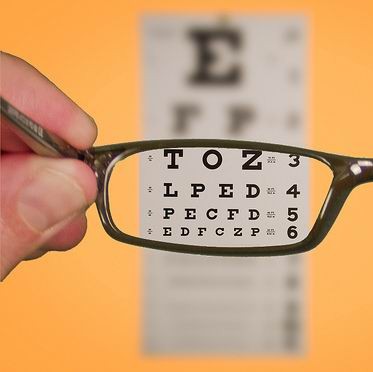
Several of this week’s readings revolve around the theme of sight, what we see, what we fail to see, and how God sees differently than we do.
In 1 Samuel 16, Samuel is sent to Bethlehem to anoint the next king of Israel. When he sees Jesse’s sons, Samuel assumes the oldest and strongest must be God’s choice. Yet God gently corrects him: “The LORD does not see as mortals see.” David, the youngest and least expected, is the one God has chosen.
In John 9, Jesus heals a man born blind. At first glance, the story appears to be about physical sight, but the deeper drama concerns spiritual vision. The man who had been blind gradually comes to see more clearly who Jesus is, while the religious authorities (who believe they already see clearly) become increasingly clouded to what God is doing right in front of them.
These stories invite us into an important stewardship question: How are we stewarding our vision?
Stewardship is often framed around money or resources, but it also includes how we see the world and the people around us. Our perception shapes our response. If we see only the obvious (the impressive résumé, the outward appearance, the familiar voice) we may miss the quiet ways God is working through unexpected people and places.
Samuel almost missed David. The Pharisees almost missed the miracle. Both stories remind us how easily our assumptions can limit our ability to recognize God’s work.
Psalm 23 adds another dimension to this theme. “The LORD is my shepherd.” A shepherd sees the flock clearly, knowing when a sheep is wandering, when it needs rest, when it needs protection. The image reminds us that our lives are lived under the attentive care of God, who sees us more deeply than we see ourselves.
Stewardship, then, involves learning to see as God sees. It is the practice of looking beyond appearances and asking deeper questions. Who is being overlooked in our communities? Where might God be working in ways we did not expect? What gifts might be present in people we have not yet noticed?
Paul’s words in Ephesians 5 echo this invitation: “Live as children of light.” Light reveals what has been hidden. When we walk in the light of Christ, we begin to see more clearly—our neighbors, our communities, and even ourselves.
The good news in these readings is that clearer vision is not something we create on our own. It is something God gives. Just as Jesus opened the eyes of the man born blind, God continues to open our eyes to new possibilities for faith, service, and generosity.
As stewards of God’s gifts, we are called to cultivate this kind of vision. We pray for eyes that notice the overlooked, hearts that recognize hidden gifts, and communities willing to trust that God’s work often begins in the most unexpected places.
Because when we begin to see as God sees, the world, and our role within it, looks very different.
In Worship
This week’s theme of sight and light could be woven into worship through visual elements. Consider beginning the service with a brief moment of dimmed lighting that gradually brightens during the opening hymn or confession, symbolizing God bringing light into darkness.
Hymns that emphasize light and vision would reinforce the theme, such as “Open My Eyes, That I May See,” “Christ, Be Our Light,” or “Amazing Grace,” which echoes the Gospel’s theme: “I once was lost, but now am found; was blind, but now I see.”
Prayers of the day might ask God to open our eyes to the needs and gifts within our community. During the sermon, a simple prop (such as a pair of glasses or a small lantern) could illustrate how clarity and illumination help us see what was previously hidden.
The service might conclude with a sending that echoes Ephesians 5: a blessing that encourages the congregation to “walk as children of light,” noticing where God is already at work in the world around them.
Worship with Youth
Invite youth into a conversation about perception and assumptions. Begin with a quick activity: show them an optical illusion or image that can be interpreted in more than one way. Ask what they see at first, and then what they notice once someone points out another perspective.
Connect this to the story of the man born blind in John 9. Many people in the story believed they understood what was happening, but they actually missed what God was doing. The man who had been blind ended up seeing the clearest.
This can open a conversation about how we sometimes judge people quickly based on appearances, popularity, or reputation. Stewardship includes being responsible for how we treat others and how open we are to seeing the gifts in people around us.
Challenge the youth group to practice “seeing differently” during the week. Encourage them to notice someone who might be overlooked at school and intentionally reach out with kindness or encouragement.
Worship with Children
For a children’s message, bring a small flashlight and turn off the lights briefly (if possible). Ask the children what happens when it is very dark. It can be hard to see where to go or what is around us. Then turn on the flashlight. Suddenly things become clearer.
Explain that in today’s Gospel story, Jesus helps a man who could not see. But the story is also about something deeper: learning to see how God sees. Sometimes people only look at what is on the outside (how someone looks or what they wear). But God looks at the heart.
You might hold up a mirror and say, “When God looks at you, God sees someone special and loved.”
Encourage the children to practice “seeing like God” this week by noticing others who might feel left out and showing them kindness.
Close with a short prayer asking God to help everyone see the world with love, compassion, and light.
Here are earlier preaching reflections for Lent 4A:
2023 – Blindness, sightedness and the folly of assuming
2020 – Sight in a season of shadows
2017 – Real vision
2014 – Of spit, mud and miracles
2011 – A question of blindness



Leave a Reply