

By Karen J. Kretschmann
Revised Common Lectionary reflection for the Third Sunday in Lent, Year A
March 8, 2026
Key verse: Jesus said to her, “Everyone who drinks of this water will be thirsty again, but those who drink of the water that I will give them will never be thirsty. The water that I will give will become in them a spring of water gushing up to eternal life.” – John 4: 13-14
Water is a central character in this week’s Lectionary texts. We hear in Exodus 17 the plight of thirst among the Israelites. They are an ornery bunch, quarreling, and grumbling, and demanding water. They have laid the blame on Moses, selfishly deciding he has misled them by leading them out of Egypt into this rugged and sparse land lacking food and water. Here water takes on the role as essential to life.
Where in John as Jesus engages with the Samaritan woman, water embodies living water, welling up to give eternal life. Both these stories call us to consider stewardship of water resources, to sustain life, and provide everlasting life.
Water is essential to all life, is deeply embedded in our global economy, and may be our next world’s power struggle for who can buy the most water rights. As we experience in these readings, water is deeply connected to God, and as stewards of God’s creation we must consider our own use of water.
I expect we all have had a time when were “dying of thirst.” We are usually not at our best in these moments. We just want water. We want as much as we can get. We want to make sure we are never without. Across our world and nation, there are communities living with the struggle of limited water. Over 760 million people do not have access to clean water, and globally more than 2 billion people face water stress daily.
Much of the world cannot take a hot shower, get clean water from a faucet or flush a toilet in their home. Yet many of us in our congregations have water in abundance. We do not think twice about running the faucet, soaking in a bath or watering our yards. Yet the United States is not immune to water scarcity. In the Southwest, our Navajo Evangelical Mission at Rock Point reports more than half the households do not have safe drinking water. And we’ve all heard of the Flint Michigan water crisis of 2014, when the city switched its water source to the contaminated Flint River, which caused unsafe levels of led to enter the homes of many residents. Even today some people in flint are not comfortable with the water quality. With increasing severe weather, our coastal communities never know when too much water may cause water consumption issues.
John’s story of Jesus and the Samaritan woman also commands us to consider water access. Here, the woman has an encounter with Christ who offers living water, but it happens at Jacobs Well – the center of the community, the lifeline to water that provides for the people, flocks, and crops and is open to all.
We can talk about why the Samaritan Women goes at midday and her living situation, but it’s important to realize she is still allowed to gather water at the community well, the sacred place where she meets the Messiah, and she shares the story of living water, “a spring of water gushing up to eternal life.”
We can learn from these stories that water is central to community and must not be hoarded. If we focus on our personal use of water, cutting back on water waste as we can, advocating for sustainable water policies and economic practices, working with creation care and hunger partners, as well as local conservation organizations, we will be the people God has called us to be, the stewards of water, who just might be living water too.
In Worship
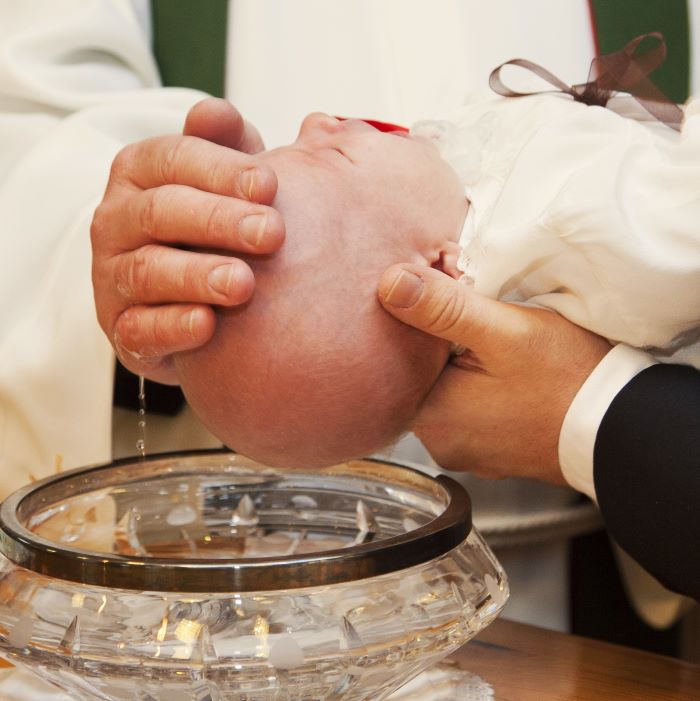
Worship is a perfect time to remind folks of the life giving “living water,” provided by God and Christ himself, through the baptismal font. If possible, move the font to the front center and encourage folks as they come up to receive communion to touch the water and experience the “living water” from Christ as they receive the eucharist.
You may also want to share in the bulletin, announcement or weekly news a few resources:
Environment Clean Water Factsheet from our ELCA Advocacy: https://lutheransrestoringcreation.org/wp-content/uploads/2021/04/Environment_Factsheet_Clean-Water.pdf
National Geographic Water Conservation Tips: https://www.nationalgeographic.com/environment/article/water-conservation-tips
Worship with youth:
Our youth are often very concerned about environmental needs. Consider using the ELCA World Hunger Walk for Water experience, an opportunity for youth and adults to experience firsthand what it is like to carry a 5-gallon jug of water (41.5 pounds) through a simulated water-collection experience (link below). Along the way, participants are confronted with different obstacles that help them realize some of the struggles those walking for water may encounter. Afterward, participants explore important questions such as, “How accessible is clean water in your hometown? What changes would you have to make if you didn’t have (or don’t have) easy access to clean water?” And, “What effects did access to clean water have on the people in the story you followed?”
Here’s the link to the Walk for Water experience: https://elcamediaresources.blob.core.windows.net/cdn/wp-content/uploads/ELCAWFWDoItYourself.pdf
Explore the Environment Clean Water Factsheet (link above), or the National Geographic Water Conservation Tips (link above) and challenge them to implement some of the suggestions.
Worship with children:
Open by asking the children to think of a time they were really thirsty. How did they feel [tired, angry, grouchy]. Then ask the children ways they use water at home [drink water, wash hands, play in a pool, brush teeth, water plants, take a bath, flush the toilet].
If possible provide each child a cup and pour some water from a pitcher or container with a spigot. But make sure you do not have enough to go around (have a second one hidden). Then ask them how it feels to be the one who goes without water. Share with them that around the world there are many kids who cannot get water to drink each day. Pretend to pour the empty container again showing how it runs dry. Then let them know how lucky we are to have water, and fill up the remaining kids cups.
Finally, ask them how they might be able to use less water at home and not waste water. Share ideas from the National Geographic Water Conservation Tips (link above). Even ask the whole congregation to yell out a few ideas.
End in prayer: We give you thanks, O God, for in the beginning your Spirit moved over the waters and by your Word you created the world, calling forth life in which you took delight. – Evangelical Lutheran Worship, p. 230
Previous reflections for Lent 3A:
2023 – Everybody is thirsty for God’s living water
2020 – Leading God’s people in these most anxious times
2017 – LifeWater
2014 – Thirst
2011 – You, me and ‘Liquid E’




Leave a Reply